Story by Sheryl Prentice sprentice@kpcmedia.com
Shared with permission from KPC Media
KENDALLVILLE — Collaboration and an opportunity to build relationships for self-sufficiency are the hallmarks of the Dekko Foundation’s work in fiscal year 2019, ending Aug. 31, 2020.
The foundation’s 40-page annual report details collaborative projects in Indiana, Iowa, Minnesota and Alabama that fulfill its mission of fostering economic freedom through education.
Locally, the foundation’s prominent project has been the creation of the Community Learning Center in collaboration with several community partners. The CLC, as it is known, has breathed new life into a former school building.
The building has been a whirling dervish of construction in the past year with improvements and renovations inside and out. The first floor is being used for programs, classes and office space. The historic auditorium on the second floor has been restored. New windows, insulation, HVAC systems, and a solar panel array on the roof contribute to energy efficiency.
Construction is progressing on the foundation’s new office space on the CLC’s third floor. The United Way of Noble County will also move its office from the first to the third floor.
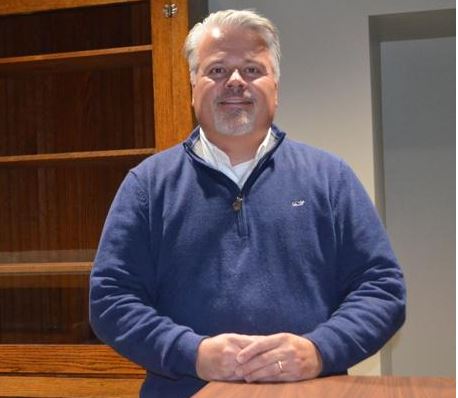
Foundation president Thomas Leedy said the target date is after Thanksgiving to move the foundation’s headquarters to the CLC from its current location north of Kendallville. The date remains fluid, though, due to availability of materials and supplies and the effect of the COVID-19 pandemic.
“We want to be at the CLC full time as soon as possible,” Leedy said. “We’re in the same environment as people who are working at self-sufficiency. We absorb all that energy.”
The foundation’s annual report for 2019 is filled with accomplishments, aided by a network of partnering organizations. The foundation serves 13 counties in Indiana, Iowa, Minnesota and Alabama.
“The overarching theme is collaboration,” said Leedy. “It came about with the CLC partners and is an opportunity to build relationships for self-sufficiency.”
Founder Chet Dekko was a fan of Peter Drucker, a business management consultant, educator and author. Drucker believed that non-profit organizations exist to bring about change in society.
Dekko came to believe that young people should have educational opportunities to support healthy development and self-sufficiency so that as adults, they produce more than they consume and are free to make choices about their own lives. Dekko envisioned this as economic freedom when he created his foundation.
Leedy said that non-profit organizations benefit from collaboration, in contrast to for-profit businesses which are built on competition with each other.
“There’s more power in collaboration,” Leedy said. “The focus is on change and it does not matter who brings it about.”
Competition works well for for-profit businesses, Leedy said. While profit is the motive, he said some businesses do care about their missions.
“Money is both the end and the means. For the non-profit, money is only the means,” he said. “It depends on how we frame it and we must keep the end and the means in balance.”
Skills, knowledge and character are key elements in developing the self-sufficiency that leads to economic freedom.
“Self-sufficiency puts a person in a position to help others,” Leedy said. “Resilience and self-sufficiency is empowering to every person.”
Leedy noted that economic freedom is not income-based or about building wealth, although both are influences. When people produce more than they make, they can meet their basic needs and use the surplus to help others.
The foundation has focused its work on children, youth and youth development for more than 25 years. By starting to build self-sufficiency early in life, young people get a head start in developing and using skills that transfer into other areas of life as adults.
Leedy said Dekko was a proponent of problem solving as one of those “transfer” skills. Dekko believes that problem solving gives a person the framework for learning about issues, find a cause and seek solutions.
The principles of collaboration learned in creating the CLC may be applicable in the foundation’s service communities beyond Kendallville. Leedy said projects may look differently in each community but have the same outcome in creating collaboration among organizations.
“The barriers to self-sufficiency are that society does ‘to’ or ‘for’ young pople,” Leedy said. “We must allow kids to do for themselves to gain knowledge, experience, understanding and wisdom. The more we allow young people to engage in and apply that knowledge, understanding and experience, they can apply to problem solving.”
It’s not too late for adults to develop self-sufficiency, Leedy said. Intergenerational interaction between adults and youth is a support and benefit to both. Intergenerational programs at the CLC have already begun that engagement.
The foundation’s future goals will continue to provide educational opportunities for young people and the adults in their sphere. Leedy said the foundation will review previously funded organizations to identify those that have lost significant funding for their missions because of the pandemic.
The foundation will examine ways to create more non-four-year-degree paths for young people pursuing higher education. These pathways could be two-year, entrepreneurship or apprentice programs.
Early childhood education will continue to be the foundation’s core goal into 2021 and beyond. Leedy said early childhood education and the performing arts are two sectors of society hardest hit by the COVID-19 pandemic.
“We want to build a model or affordability and quality for child care centers and early education centers,” Leedy said. “The brain development from age 0 to 5 is tremendous.”